Medically Reviewed by: Dr Ishwarya Selvaraj [MBBS, Clinical Dermatology (Ireland), Aesthetic Practitioner]
Last Medically Reviewed: July 2026
Introduction
Hair fall, hair thinning, and reduced hair density are common concerns affecting both men and women. Genetics, hormonal changes, stress, nutritional deficiencies, ageing, medications, and certain scalp or medical conditions can contribute to progressive hair loss.
While surgical hair transplantation may be considered for advanced hair loss in suitable candidates, many individuals look for non-surgical treatment options that may support existing hair follicles and improve the overall appearance of hair density.
GFC Hair Treatment, also known as Growth Factor Concentrate Therapy, is a regenerative, blood-derived treatment that may be used as part of a dermatologist-guided hair restoration plan.
For individuals looking for GFC Hair Treatment in Chennai, understanding how the procedure works, how it differs from PRP, who may be suitable, and what results can realistically be expected can help in making an informed decision.
At BioRevive, every hair restoration treatment plan should begin with a detailed scalp and hair assessment to identify the possible cause of hair loss and determine the most suitable treatment approach.
What Is GFC Hair Treatment?
Growth Factor Concentrate Therapy (GFC) is a non-surgical hair restoration procedure that uses a specially prepared concentrate derived from the patient's own blood.
Growth factors are naturally occurring biological signalling proteins involved in cellular communication and tissue repair. In hair restoration, growth-factor-based treatments may be used as part of an individualised treatment plan designed to support the scalp environment and existing hair follicle function.
Depending on the treatment protocol and clinical assessment, GFC Hair Treatment in Chennai may be considered for individuals experiencing:
- Excessive hair fall
- Hair thinning
- Reduced hair density
- Early-stage pattern hair loss
- Diffuse hair thinning
- Weak or fine-looking hair
A proper medical history, scalp examination, and hair assessment are essential before deciding whether GFC is suitable.
How Is GFC Different from PRP?
GFC and PRP are both autologous treatments, meaning they use components derived from the patient's own blood. However, the preparation methods and final products are not necessarily the same.
What Is PRP?
Platelet-Rich Plasma (PRP) is prepared by processing a patient's blood to obtain plasma with a higher concentration of platelets than normal blood.
Platelets contain and release several biological growth factors involved in tissue repair and cellular signalling.
In hair restoration, PRP may be used as part of a dermatologist-guided treatment plan for suitable individuals with certain types of hair loss.
What Is GFC?
Growth Factor Concentrate Therapy generally involves specialised processing intended to obtain a concentrate containing growth-factor-rich components derived from the patient's own blood.
The exact composition of GFC can vary depending on:
- The preparation system used
- The processing protocol
- The manufacturer's technology
- The clinical treatment method
For this reason, GFC should not be described as identical to PRP.
GFC vs PRP: Key Differences
| Feature |
GFC Hair Treatment |
PRP Hair Treatment |
| Source material |
Patient's own blood |
Patient's own blood |
| Preparation |
Specialised growth-factor preparation process |
Platelet-rich plasma preparation |
| Final composition |
Can vary depending on the system and protocol |
Platelet concentration can vary depending on the protocol |
| Primary approach |
Growth-factor-based treatment |
Platelet-based treatment |
| Standardisation |
May vary between systems |
Preparation methods also vary |
| Clinical suitability |
Depends on individual assessment |
Depends on individual assessment |
Which Is Better: GFC or PRP?
There is no single treatment that is universally better for every person.
The most appropriate option depends on factors such as:
- Type of hair loss
- Severity of hair thinning
- Existing follicle activity
- Scalp condition
- Medical history
- Treatment goals
- Dermatologist's clinical assessment
Current evidence for blood-derived regenerative treatments continues to evolve, and protocols are not fully standardised across all clinics and devices.
A dermatologist can help determine whether GFC, PRP, medical therapy, or another hair restoration approach is more appropriate for your individual condition.
Understanding the Hair Growth Cycle
Hair growth occurs in a natural biological cycle. Understanding this cycle also explains why hair restoration treatments usually require several months before visible changes can be properly assessed.
Anagen – Growth Phase
This is the active phase of hair growth, during which the hair follicle produces new hair.
The duration of the anagen phase can vary between individuals and different areas of the scalp.
Catagen – Transition Phase
During this short phase, active hair growth slows, and the follicle transitions towards the resting stage.
Telogen – Resting and Shedding Phase
During the telogen phase, the existing hair eventually sheds, allowing the cycle to begin again.
Excessive shedding or noticeable thinning may indicate an underlying cause that requires professional evaluation.
Why Do Hair Treatments Take Time?
Hair follicles follow a biological growth cycle. Because of this, visible changes in hair density or hair quality cannot usually be assessed immediately after treatment.
Hair restoration treatments generally require:
- Time for the biological hair cycle to progress
- Consistent follow-up where recommended
- Appropriate treatment of underlying causes
- Realistic expectations regarding results
Common Causes of Hair Loss
Hair loss can occur for many reasons. Common causes include:
- Genetic factors
- Hormonal changes
- Stress
- Nutritional deficiencies
- Thyroid-related concerns
- Scalp conditions
- Certain medications
- Pregnancy and postpartum changes
- Ageing
- Autoimmune conditions
- Environmental factors
Identifying the underlying cause is important because hair loss does not have one universal treatment.
For example, hair thinning caused by androgenetic alopecia may require a different treatment approach from sudden hair shedding caused by nutritional deficiencies or a medical condition.
A proper diagnosis is therefore essential before beginning GFC Hair Treatment in Chennai or any other hair restoration procedure.
How Does Growth Factor Concentrate Therapy Work?
A GFC treatment session generally involves preparing a growth-factor-based concentrate from a small sample of the patient's own blood.
The exact processing method depends on the treatment system and clinical protocol used.
The procedure typically involves the following steps:
1. Blood Collection
A small sample of blood is collected under appropriate clinical conditions.
2. Processing and Preparation
The blood sample is processed using the specific GFC preparation system and protocol.
The purpose is to prepare the treatment material according to the manufacturer's recommended process and the dermatologist's clinical protocol.
3. Scalp Assessment and Preparation
The dermatologist identifies the areas of concern and prepares the scalp for treatment.
4. Administration to Selected Areas
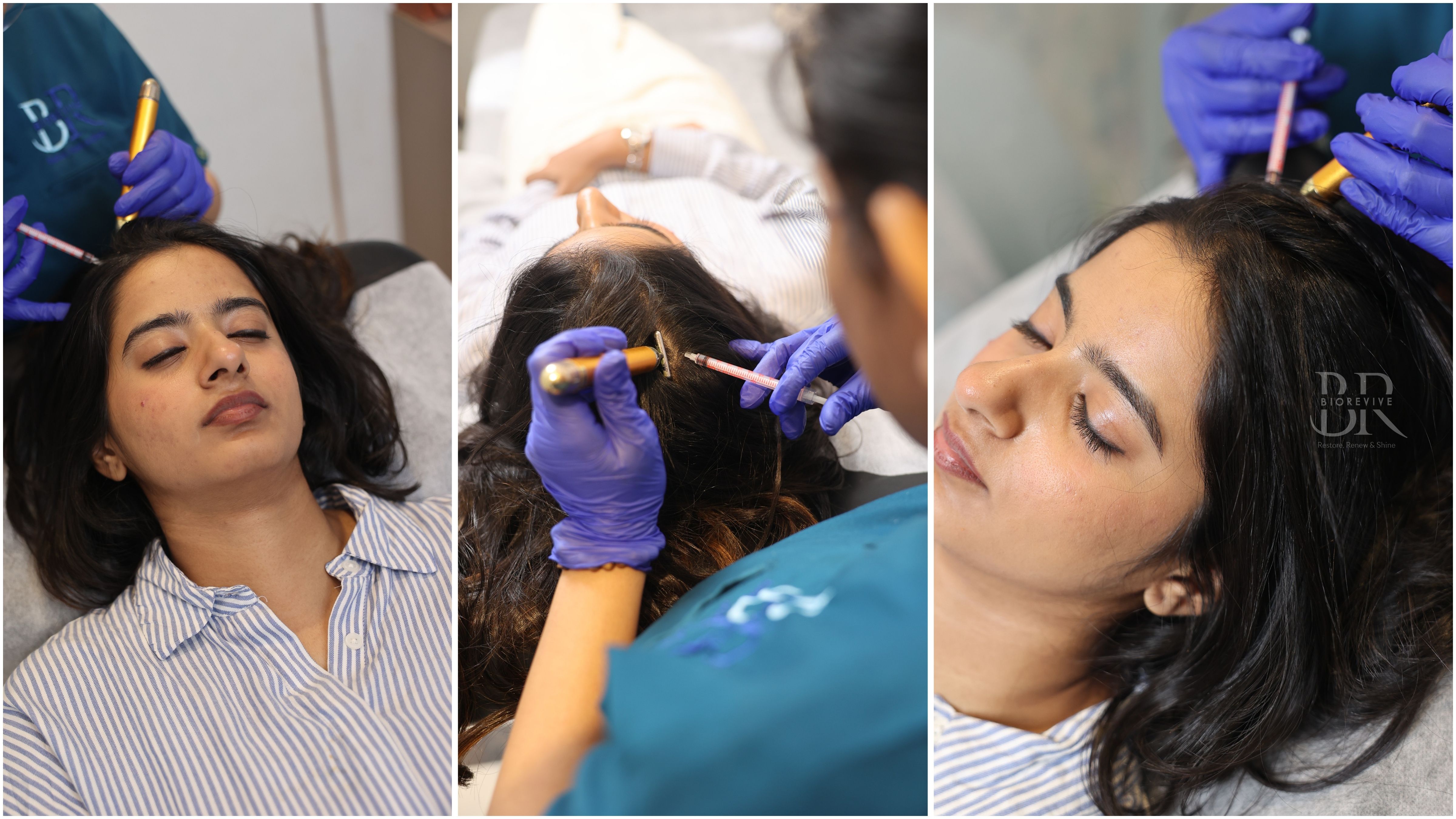
The prepared concentrate is administered to selected areas of the scalp according to the individual's treatment plan.
The treatment is intended to support the scalp environment and existing hair follicle function as part of a personalised hair restoration approach.
Results can vary depending on the cause and severity of hair loss.
Benefits of GFC Hair Treatment
1. Non-Surgical Hair Restoration
GFC is a minimally invasive treatment and does not involve surgical incisions or hair transplantation.
2. Uses the Patient's Own Blood-Derived Material
The treatment uses specially prepared components derived from the individual's own blood.
3. May Support the Scalp and Hair Follicle Environment
Growth factors are involved in natural biological signalling processes and may support the environment around existing hair follicles.
4. May Improve the Appearance of Hair Density
With an appropriate treatment plan, some individuals may notice gradual improvements in the appearance of hair quality, thickness, or density over time.
5. Minimal Downtime
Many individuals can return to their usual routine after treatment, depending on the dermatologist's recommendations.
6. May Be Considered for Men and Women
GFC may be considered for both men and women after a proper medical and scalp assessment.
Who May Consider GFC Treatment for Hair Loss?
A dermatologist may evaluate GFC as part of a treatment plan for individuals experiencing:
- Early-stage hair thinning
- Male pattern hair loss
- Female pattern hair thinning
- Diffuse hair thinning
- Excessive hair shedding
- Reduced hair density
- Weak or thinning hair
However, not every type of hair loss responds to the same treatment.
A detailed scalp assessment is important before beginning any hair loss treatment in Chennai.
Who May Not Be a Suitable Candidate for GFC?
Suitability should always be determined by a qualified medical professional.
Depending on the individual's medical history and scalp condition, GFC treatment may need to be avoided, delayed, or reconsidered in individuals with:
- Active scalp infections
- Open wounds in the treatment area
- Certain blood-related disorders
- Certain bleeding or clotting concerns
- Medical conditions requiring primary treatment
- Certain medications that may affect the procedure
- Hair loss caused by an untreated underlying medical condition
- Advanced follicle loss where non-surgical treatment may have limited benefit
This is not a universal list.
Your dermatologist should review your complete medical history and determine whether GFC Hair Treatment in Chennai is appropriate for your specific condition.
GFC Hair Treatment Procedure
Step 1: Consultation and Hair Analysis
The dermatologist evaluates:
- Hair loss pattern
- Scalp condition
- Hair density
- Medical history
- Possible causes of hair loss
- Current medications
- Previous hair treatments
- Individual treatment goals
This assessment helps determine whether GFC is appropriate.
Step 2: Blood Collection
A small sample of blood is collected under appropriate clinical conditions.
Step 3: Growth Factor Preparation
The blood sample is processed using the specialised GFC preparation system and treatment protocol.
Step 4: Scalp Preparation
The treatment area is cleaned before the procedure.
Depending on individual requirements, appropriate comfort measures may be recommended.
Step 5: GFC Administration
The prepared treatment material is administered to selected areas of the scalp according to the personalised treatment plan.
Treatment duration can vary depending on:
- The treatment area
- The degree of hair thinning
- The treatment protocol
- Individual requirements
Recovery After GFC Hair Treatment
One advantage of GFC is that it is generally a minimally invasive procedure.
Some individuals may experience temporary effects such as:
- Mild scalp tenderness
- Slight redness
- Temporary sensitivity
- Mild swelling around treatment areas
Recovery experiences vary from person to person.
Always follow the aftercare instructions provided by your dermatologist.
GFC Hair Treatment Aftercare
During the First 24 Hours
Your dermatologist may advise you to:
- Avoid washing your hair for a specified period
- Avoid strenuous physical activity if advised
- Avoid swimming or steam exposure for the recommended duration
- Avoid unnecessary scalp products
- Protect the scalp from excessive sun exposure
- Avoid touching or irritating the treatment area
During the Following Days
Depending on your treatment plan:
- Use hair products recommended by your dermatologist
- Maintain a balanced diet
- Stay adequately hydrated
- Avoid harsh chemical procedures unless advised otherwise
- Follow your personalised hair care instructions
Do not begin or stop medications, supplements, or hair treatments without medical guidance.
When Will You See GFC Hair Treatment Results?
Hair restoration treatments generally require patience because the natural hair growth cycle takes time.
The timeline for visible changes can vary depending on:
- The cause of hair loss
- Severity of thinning
- Individual scalp condition
- Genetics
- Overall health
- Treatment schedule
- Recommended complementary treatments
- Response to treatment
Some individuals may gradually notice changes in hair quality and the appearance of density over several months.
Results vary and cannot be guaranteed.
General Expectations After Treatment
| Period |
What Some Individuals May Experience |
| First few days |
Temporary redness, tenderness, or sensitivity may occur |
| First few weeks |
Usually too early to assess visible hair growth |
| Around 2–3 months |
Early changes may begin in some individuals |
| Around 3–6 months |
Changes in hair quality or the appearance of density may become easier to assess |
| Beyond 6 months |
Further evaluation and maintenance planning may be considered |
These are general expectations only. Individual results and timelines can vary significantly.
Your dermatologist can provide more personalised guidance based on your specific type of hair loss.
How Many GFC Sessions Are Required?
The number of GFC sessions required depends on individual factors such as:
- Hair loss pattern
- Severity of hair thinning
- Scalp health
- Underlying cause of hair loss
- Treatment goals
- Response to treatment
Your dermatologist will recommend a personalised treatment schedule after evaluating your condition.
Maintenance requirements can also vary between individuals.
GFC Treatment for Hair Fall and Hair Thinning
For individuals experiencing excessive hair fall, it is important to first identify the underlying cause.
Hair fall may be associated with:
- Stress
- Nutritional deficiencies
- Hormonal changes
- Genetics
- Medical conditions
- Scalp concerns
- Recent illness
- Postpartum changes
- Certain medications
GFC Treatment for Hair Loss may be considered as part of a broader treatment plan after appropriate medical evaluation.
A personalised approach may provide better results than using a single treatment for every type of hair loss.
GFC vs Hair Transplant
| Treatment |
Surgical Procedure |
Downtime |
Primary Approach |
| GFC Treatment |
No |
Usually minimal |
May support existing hair follicles as part of a treatment plan |
| PRP Therapy |
No |
Usually minimal |
Platelet-based scalp treatment |
| Hair Transplant |
Yes |
Longer recovery |
Relocates hair follicles from a donor area |
Individuals with advanced hair loss may require a different treatment approach from those experiencing early-stage thinning.
GFC is not necessarily a replacement for hair transplantation in individuals who have significant permanent follicle loss.
Is GFC Hair Treatment Suitable for Women?
Women experiencing hair thinning or excessive shedding may consider a professional hair and scalp assessment.
Female hair loss can have different causes, including:
- Hormonal changes
- Nutritional deficiencies
- Stress
- Postpartum changes
- Genetic factors
- Thyroid-related concerns
- Certain medical conditions
A dermatologist can identify the underlying cause and recommend whether growth factor concentrate therapy may be included in the treatment plan.
Is GFC Hair Treatment Suitable for Men?
Men experiencing early-stage pattern hair loss or progressive thinning may benefit from early professional evaluation.
The suitability of GFC depends on factors such as:
- Hair loss stage
- Existing follicle activity
- Scalp condition
- Genetics
- Individual treatment goals
Early assessment can help identify suitable treatment options and address the underlying cause of hair loss.
GFC Hair Treatment Cost in Chennai
- Severity of hair loss
- Number of sessions recommended
- Treatment area
- Individual treatment plan
- Additional hair restoration procedures
- Follow-up and maintenance requirements
A consultation is the best way to receive a personalised treatment recommendation and accurate cost information based on your individual condition.
Other Hair Restoration Treatments
Depending on the individual's scalp condition and diagnosis, GFC may be considered alongside other hair restoration options.
Related treatments may include:
The appropriate treatment should always be selected based on an individual scalp assessment.
Why Choose a Personalised Hair Loss Treatment Plan?
Hair loss does not have one universal cause or one universal solution.
A personalised treatment plan considers:
- Hair loss pattern
- Scalp condition
- Medical history
- Lifestyle factors
- Nutritional status where clinically relevant
- Treatment goals
- Severity and duration of hair loss
- Existing hair follicle activity
For individuals searching for non-surgical hair restoration in Chennai, a detailed consultation can help identify the most appropriate treatment approach.
GFC Hair Treatment in Chennai
If you are experiencing hair fall, thinning, or reduced hair density, a professional consultation can help determine the possible cause and appropriate treatment options.
GFC Hair Treatment in Chennai may be considered for suitable individuals as part of a personalised hair restoration plan.
At BioRevive, treatment planning should be tailored according to individual scalp concerns, hair loss patterns, medical history, and hair restoration goals.
A professional assessment is important because treating the underlying cause of hair loss is often as important as selecting the right hair restoration procedure.
Frequently Asked Questions
Is GFC Hair Treatment painful?
The level of discomfort varies between individuals. Your dermatologist may recommend appropriate comfort measures during the procedure.
How long does a GFC session take?
The treatment duration can vary depending on the treatment area, procedure, and individual treatment plan.
Is there downtime after GFC treatment?
Many individuals experience minimal downtime, although temporary scalp sensitivity, tenderness, redness, or mild swelling may occur.
How many GFC sessions are required?
The number of sessions depends on the individual's hair loss pattern, scalp condition, underlying cause, and treatment goals.
Can GFC help with hair thinning?
GFC may be considered as part of a dermatologist-guided treatment plan for suitable individuals experiencing hair thinning. Results vary depending on the underlying cause and severity of hair loss.
Can women undergo GFC hair treatment?
Yes, GFC may be considered for both men and women after an appropriate medical and scalp assessment.
Can GFC replace a hair transplant?
GFC and hair transplantation are different treatment approaches. Individuals with advanced or permanent follicle loss may require a different treatment strategy, including evaluation for hair transplantation where appropriate.
Can GFC treat all types of hair loss?
No. Hair loss can occur for many different reasons. Some conditions require treatment of an underlying medical, hormonal, nutritional, or scalp-related cause.
A professional diagnosis is important before selecting a hair restoration treatment.
How soon can I see results after GFC?
Visible changes cannot usually be assessed immediately because hair growth follows a natural biological cycle.
Some individuals may notice gradual changes over several months, but timelines and results vary.
Can I undergo GFC if I have an active scalp infection?
An active scalp infection or inflammatory condition should be evaluated and appropriately treated before undergoing a procedure. Your dermatologist will determine whether treatment should be delayed.
Can I combine GFC with other hair loss treatments?
Depending on your diagnosis, a dermatologist may recommend combining GFC with other evidence-based hair loss treatments or procedures.
The appropriate combination depends on your individual condition and should be medically supervised.
What is the GFC Hair Treatment cost in Chennai?
The cost depends on individual treatment requirements, the number of sessions recommended, and the overall treatment plan.
A consultation is the best way to receive an accurate cost estimate.
Conclusion
GFC Hair Treatment, also known as Growth Factor Concentrate Therapy, is a non-surgical, blood-derived treatment that may be considered for suitable individuals experiencing hair thinning, excessive hair fall, and reduced hair density.
The suitability and results of treatment depend on several individual factors, including the underlying cause and severity of hair loss, scalp condition, existing follicle activity, and the overall treatment plan.
If you are looking for GFC Hair Treatment in Chennai, a detailed scalp consultation can help determine whether Growth Factor Concentrate Therapy, medical treatment, PRP, or another hair restoration approach is appropriate for your specific condition.
Book a consultation at BioRevive to receive a personalised evaluation and treatment plan for your hair and scalp concerns.
Book Your Consultation Today
Medical Evidence and Research
Research into hair loss treatments and blood-derived regenerative therapies continues to evolve.
Growth factors are known to play important roles in cellular signalling and tissue biology. However, the evidence and clinical protocols for specific GFC preparation systems may vary.
PRP has been studied more extensively than some newer growth-factor-based approaches for certain types of hair loss, particularly androgenetic alopecia. However, treatment protocols, platelet concentrations, preparation methods, and patient selection can differ between studies.
For this reason:
- Results should not be guaranteed
- Treatment protocols should be individualised
- Underlying causes of hair loss should be identified
- Evidence-based medical treatments may also be recommended where appropriate
- GFC should be performed under qualified medical supervision
Suggested Reference Sources
Before publishing, add dermatologist-reviewed references from authoritative medical and scientific sources, such as:
- Peer-reviewed research on platelet-rich plasma and androgenetic alopecia
- Reviews on growth factors and hair follicle biology
- Dermatology guidelines for the diagnosis and management of hair loss
- Research specifically evaluating the GFC preparation system used at BioRevive, where available
Important: Only cite studies that are directly relevant to the specific GFC technology and treatment protocol used by BioRevive. Avoid presenting evidence for PRP as if it automatically proves the effectiveness of every GFC preparation method.
.png)