Written by: BioRevive Editorial Team

Medically reviewed by: Dr. Aishwarya Selvaraj, MBBS, Clinical Dermatology (Ireland), Aesthetic Practitioner

Last Medically Reviewed: September 2026

About the Medical Reviewer: Dr. Aishwarya Selvaraj is the founder and managing director of BioRevive by Skin Envy, with more than 12 years of experience and a focus on aesthetic medicine and evidence-based skin and wellness care.

Medical Disclaimer: This article is for educational purposes and does not replace an individual consultation with a dermatologist or appropriately qualified medical professional. Skin pigmentation can have different causes, so treatment should be selected after a professional assessment.

Introduction 

Dark spots, uneven skin tone, and facial pigmentation are common concerns, but they are not always caused by the same skin condition. A brown mark left behind after acne is different from the symmetrical patches associated with melasma, and both can require a different treatment approach.

If you are considering Pigmentation Treatment in Chennai , the first step should not be choosing a facial or laser based only on advertisements. It is important to understand why the pigmentation has appeared, how deep it may be, whether it is linked to acne or hormonal changes, and how your skin responds to procedures.

Treatments such as O2 Derma, Pumpkin Facial, Dermapen-4, and Hollywood Spectra may have different roles in improving skin appearance, but they should not be treated as interchangeable solutions for every type of pigmentation.

Quick Answer: Are Dark Spots, Pigmentation, and Melasma the Same?

No. Dark spots and pigmentation are broad terms, while melasma is a specific pigmentation disorder that commonly appears as brown or grey-brown patches on the face.

Dark spots may develop after acne, skin irritation, inflammation, injury, or sun exposure. This is often referred to as post-inflammatory hyperpigmentation (PIH).

Melasma, on the other hand, commonly appears as symmetrical patches on areas such as the cheeks, forehead, upper lip, and nose. Sun exposure and hormonal factors can contribute to melasma, and it can be more noticeable in people with darker skin tones.

This distinction matters because a treatment that may be appropriate for post-acne pigmentation may not be the right choice for melasma.

What Causes Dark Spots and Facial Pigmentation?

Pigmentation develops when the skin produces or deposits excess melanin, the pigment responsible for skin color.

Several factors can contribute to darker patches or spots, including:

  • Acne and other inflammatory skin conditions
  • Sun exposure
  • Hormonal changes
  • Skin irritation
  • Picking or scratching
  • Certain medications
  • Previous skin injuries
  • Melasma

For example, when a pimple heals, the inflammation can leave behind a brown or darker mark even after the acne itself has disappeared. In darker skin tones, post-inflammatory pigmentation can sometimes be more noticeable and may take longer to fade.

This is why treating the underlying cause is often an important part of improving pigmentation.

How Is Melasma Different From Ordinary Dark Spots?

Melasma usually presents differently from an isolated dark spot.

It often appears as

  • Brown, grey-brown, or darker patches
  • Symmetrical pigmentation on both sides of the face
  • Patches on the cheeks, forehead, or upper lip
  • Pigmentation that becomes more noticeable with sun exposure
  • Persistent or recurring discoloration

Melasma can be challenging because it is often a chronic condition with a tendency to recur. Even after improvement, pigmentation may return with sun or visible-light exposure. [1][3] 

This means the goal is not simply to “remove” the color once. Long-term maintenance and sun protection can be an important part of managing the condition.

Why Is Diagnosis Important Before Choosing a Treatment?

One of the biggest mistakes people make is assuming that every brown mark needs the same procedure.

A professional assessment may look at:

1. The appearance of the pigmentation

Is it a single spot, scattered marks, widespread patches, or symmetrical facial pigmentation?

2. Your skin tone

The risk of post-inflammatory hyperpigmentation can vary according to skin type and the intensity of a procedure.

3. The possible cause

Pigmentation after acne, sun exposure, and hormonal changes may need different approaches.

4. Previous treatments

Previous peels, lasers, facials, or strong skincare products may affect how the skin responds to another procedure.

5. Current skin sensitivity

Irritated or inflamed skin may not be ready for an aggressive treatment.
A dermatologist or appropriately qualified medical professional can help distinguish melasma from post-inflammatory pigmentation and other pigmentary conditions before recommending treatment.

Which Skin Treatments May Help?

There is no universal procedure for every pigmentation concern. The treatment selected should match the underlying concern, skin characteristics, and treatment goals.

Here are four options that may be considered at BioRevive.

1. Hollywood Spectra for Selected Pigmentation Concerns

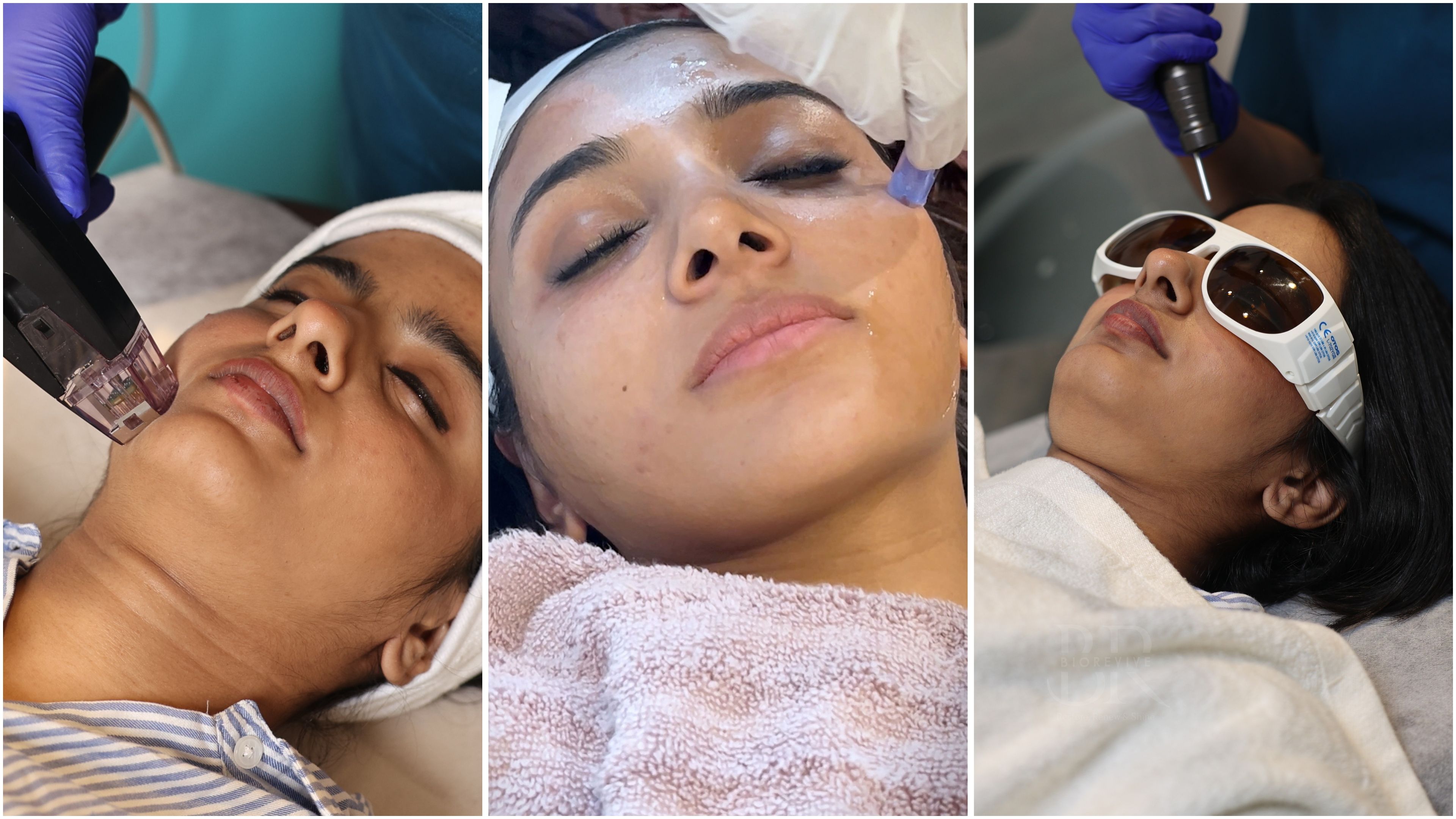
Hollywood Spectra is a laser-based treatment that may be considered when pigmentation and uneven skin tone are major concerns. Depending on the indication and clinical assessment, laser-based approaches may help target selected pigmentary concerns. Learn more about Hollywood Spectra treatment →

However, the wavelength, energy settings, treatment frequency, and overall protocol need to be chosen carefully.

This is particularly important for Indian skin, where inappropriate treatment intensity can potentially trigger or worsen post-inflammatory pigmentation.

Hollywood Spectra may therefore be considered for selected patients with:

  • Uneven skin tone
  • Certain types of facial pigmentation
  • Post-acne dark marks
  • Dull-looking complexion associated with uneven pigmentation

It should not automatically be considered a treatment for every type of melasma. Melasma can relapse, and some procedural treatments can aggravate pigmentation if used inappropriately.

2. Dermapen-4 for Texture and Selected Pigmentation Concerns

Dermapen-4 uses microneedling to create controlled microchannels in the skin. Its primary role is not simply to erase pigmentation. It may be considered when pigmentation occurs alongside concerns such as uneven texture, superficial acne marks, or an overall rough-looking complexion.

Microneedling can stimulate the skin's wound-healing response and collagen production. However, the treatment plan should be individualized, especially when pigmentation is the main concern.

For someone with both post-acne pigmentation and uneven texture, Dermapen-4 may be considered as part of a broader treatment strategy rather than being used simply as a pigment-removal procedure.

For pigmentation associated with uneven texture or superficial acne marks, Dermapen-4 treatment → may be considered as part of an individualized skin-care plan.

3. O2 Derma for Skin Refreshing and Maintenance

O2 Derma may be considered when the primary concern is dull-looking, tired, or congested skin and the goal is to support a fresher, more radiant appearance.

It can fit into a broader skin-maintenance routine, particularly for people who want a gentler approach between more targeted procedures.

For a gentler approach focused on hydration, skin freshness, and radiance, explore O2 Derma treatment at BioRevive.

However, it is important to distinguish skin radiance from treatment of a diagnosed pigmentary disorder. A treatment that makes the skin look fresher does not necessarily address the underlying cause of melasma or deeper pigmentation.

4. Pumpkin Facial for Gentle Surface Renewal

A Pumpkin Facial can provide a gentler approach to surface renewal and may help improve skin radiance.

It may be considered when the concern is:

  • Dull-looking skin
  • Uneven appearance
  • Mild surface buildup
  • Lack of radiance
  • General skin maintenance

For gentle surface renewal and skin radiance, you can also explore Pumpkin Facial treatment → at BioRevive.

It should not be positioned as a treatment that permanently removes melasma or deeper pigmentation. For patients with significant pigmentation, a pumpkin facial may be better viewed as a supportive or maintenance treatment rather than the primary treatment for the pigmentary condition.

Which Treatment Is Right for Your Concern?

Skin Concern Possible Treatment Approach
Post-acne dark marks Pigmentation-focused treatment after acne control
Uneven skin tone Assessment followed by an appropriate pigment-focused approach
Melasma Medical assessment, sun protection and individualized treatment
Pigmentation with uneven texture May require a combination approach
Dull-looking skin O2 Derma or Pumpkin Facial may be considered
Pigmentation with uneven texture and acne scars Dermapen-4 may be considered depending on skin condition
Selected facial pigmentation Hollywood Spectra may be considered after assessment

The table is intended as a general guide, not a substitute for diagnosis.

How Do You Choose the Right Pigmentation Treatment in Chennai?

Choosing a procedure based only on before-and-after photographs can be misleading.

For Pigmentation Treatment in Chennai, the more important question is what type of pigmentation you actually have.

A professional consultation should consider:

Is it post-acne pigmentation?

If the marks appeared after pimples or inflammatory acne, treating the acne itself and preventing new inflammation can be important.

Could it be melasma?

Symmetrical brown or grey-brown facial patches may suggest melasma and should be assessed before selecting an aggressive cosmetic procedure.

Is sun exposure contributing?

UV exposure can darken existing pigmentation and contribute to new pigmentation. Visible light can also worsen melasma, particularly in people with darker skin tones.

Is your skin easily irritated?

Irritation from harsh skincare products or procedures can itself contribute to pigmentation. Gentle skincare can therefore be important during treatment.

Do you have more than one concern?

Someone may have pigmentation together with acne scars, enlarged-looking pores, dullness, or uneven texture. In such cases, the treatment plan may involve more than one procedure, either together or in stages.

Why Is Sun Protection So Important?

No pigmentation treatment works effectively without proper sun protection.

UV exposure can stimulate pigmentation and make existing dark spots more noticeable. For melasma and some other pigmentation disorders, visible light can also contribute to worsening pigmentation. [1][3]

Dermatology guidance commonly recommends broad-spectrum sunscreen, and tinted sunscreen containing iron oxides may provide additional protection against visible light. [1][4]

Your daily routine may therefore include:

  • Broad-spectrum sunscreen
  • Appropriate reapplication when outdoors
  • Hats or physical sun protection
  • Shade when possible
  • Gentle skincare
  • Avoiding unnecessary irritation

For someone living in Chennai, consistent sun protection is particularly relevant because regular outdoor exposure can make pigmentation management more challenging.

Can Melasma Be Completely Removed?

Melasma can be difficult to manage and may recur even after successful improvement. The aim of treatment is generally to reduce pigmentation, improve skin tone, and control factors that contribute to recurrence, rather than promise permanent removal. [1][2][3]

Depending on the individual, treatment may involve dermatologist-directed topical therapies, sun protection, and carefully selected procedures. Chemical peels and lasers can be used cautiously in melasma but may also carry a risk of worsening pigmentation or triggering post-inflammatory hyperpigmentation. [3]

That is why a more aggressive procedure is not automatically a better procedure.

What About Post-Acne Pigmentation?

Post-acne pigmentation is different from an acne scar. If the skin surface is relatively smooth but brown marks remain after acne, the concern may be post-inflammatory hyperpigmentation rather than structural scarring. [5]

The first step is to prevent the acne from continuing to create new marks. A treatment plan may then focus on:

  • Sun protection [4][5]
  • Controlling active acne
  • Appropriate topical skincare
  • Pigmentation-focused procedures where suitable
  • Improving overall skin texture if required

Dark spots can take time to fade. The depth of pigmentation, underlying skin condition, and individual skin characteristics can all influence the timeline. [4][5]

Can Different Treatments Be Combined?

Sometimes, yes.

A patient may have pigmentation together with uneven texture, acne scars, or dull-looking skin. In such cases, a practitioner may consider a staged combination approach.

For example, Hollywood Spectra may be considered for a selected pigmentary concern, while Dermapen-4 may have a role when uneven texture is also present. O2 Derma or Pumpkin Facial may be considered as supportive skin-maintenance options depending on the individual's needs.

However, combining several procedures does not automatically produce better results. The sequence, intensity, and spacing of treatments should be planned according to skin recovery and pigmentation risk.

What Can You Expect During Recovery?

Recovery depends on the procedure selected.

Gentler skin-refreshing treatments may have relatively little downtime, while microneedling or laser-based procedures can cause temporary redness, sensitivity, or other short-term changes.

After treatment, your practitioner may recommend:

  • Gentle cleansing
  • Moisturising
  • Strict sun protection
  • Avoiding unnecessary exfoliation
  • Temporarily modifying active skincare ingredients
  • Following procedure-specific aftercare

Do not assume that a product or treatment that worked for someone else is automatically suitable for your skin.

Who May Benefit From a Professional Pigmentation Assessment?

You may consider a professional assessment if you have:

  • Persistent dark spots
  • Recurring facial pigmentation
  • Melasma-like patches
  • Post-acne marks
  • Uneven skin tone
  • Pigmentation that worsens with sun exposure
  • Pigmentation that has not improved with home skincare
  • Pigmentation combined with uneven texture

A consultation is especially useful when the pigmentation keeps returning or becomes darker despite treatment.

How Much Does Pigmentation Treatment Cost in Chennai?

The cost of Pigmentation Treatment in Chennai varies because there is no single procedure or treatment plan for everyone.

Factors that may influence the cost include:

  • Type of pigmentation
  • Treatment selected
  • Size of the treatment area
  • Number of sessions
  • Skin sensitivity
  • Whether combination treatment is recommended
  • Follow-up requirements

At BioRevive, treatment selection and cost can be discussed after assessing the skin and identifying whether the main concern is melasma, post-acne pigmentation, uneven tone, or another pigmentary issue.

Choosing a treatment solely because it is cheaper or more intensive may not be the safest approach.

Why Choose BioRevive for Pigmentation Concerns?

At BioRevive, Pigmentation Treatment in Chennai is approached according to the individual's skin condition rather than using the same procedure for every patient.

The assessment may consider:

  • Type and distribution of pigmentation
  • Skin tone
  • History of acne
  • Previous pigmentation treatments
  • Skin sensitivity
  • Sun exposure
  • Current skincare
  • Treatment goals

Depending on the assessment, treatments such as Hollywood Spectra, Dermapen-4, O2 Derma, or Pumpkin Facial may be considered for appropriate concerns.

The objective is to identify the underlying concern first and then choose a treatment approach that is appropriate for the patient's skin.

Related Treatments

Hollywood Spectra

Dermapen-4

O2 Derm

Pumpkin Facial

Frequently Asked Questions

Is pigmentation the same as melasma?

No. Pigmentation is a broad term, while melasma is a specific pigmentary disorder that commonly causes symmetrical brown or grey-brown patches on the face.

Which treatment is best for dark spots?

There is no single best treatment for every dark spot. The cause, depth, location, and skin type should be assessed before choosing a procedure.

Can Hollywood Spectra treat melasma?

Laser-based treatment may be considered for selected pigmentation concerns, but melasma requires careful management because procedures can sometimes trigger worsening pigmentation or recurrence. [3] 

Is Dermapen-4 useful for pigmentation?

Dermapen-4 is primarily a microneedling treatment. It may be considered when pigmentation occurs alongside uneven texture or other skin concerns, but it should not automatically be considered a universal pigmentation treatment.

Can a pumpkin facial remove pigmentation?

A pumpkin facial may support surface renewal and radiance, but it should not be presented as a treatment that permanently removes melasma or deeper pigmentation.

Is O2 Derma good for dull skin?

O2 Derma may be considered as a skin-refreshing or maintenance treatment when dullness is a primary concern. The appropriate treatment depends on the individual's skin condition.

Does sunscreen really matter after pigmentation treatment?

Yes. Sun and visible-light exposure can worsen pigmentation, particularly melasma. Consistent sun protection is an important part of pigmentation management. [1][3][4]

Can pigmentation come back after treatment?

Yes. Some pigmentary conditions, particularly melasma, can recur. Long-term management and sun protection may therefore be necessary. [1][3] 

Medical Evidence and Research

Pigmentation disorders have different causes and require different management strategies. The American Academy of Dermatology recommends personalized management for melasma and emphasizes daily sun protection, while DermNet notes that melasma may require a combination of approaches and that procedural treatments need careful consideration because pigmentation can worsen or recur. [1][2][3]

For post-inflammatory hyperpigmentation, identifying and controlling the underlying inflammatory trigger is important. Sun protection can help reduce further darkening, while treatment options depend on the type and depth of pigmentation. [4][5]

This is why cosmetic procedures should be selected based on diagnosis and skin characteristics rather than simply choosing the most popular treatment.

References

  1. American Academy of Dermatology — Melasma: Self-Care
  2. American Academy of Dermatology — Melasma: Diagnosis and Treatment
  3. DermNet — Melasma
  4. American Academy of Dermatology — How to Fade Dark Spots in Darker Skin Tones
  5. DermNet — Postinflammatory Hyperpigmentation

Conclusion

Dark spots, post-acne pigmentation, and melasma can look similar at first glance, but they may require different approaches. Understanding the type and pattern of pigmentation is an important first step toward appropriate skin care.
At BioRevive, treatments such as Hollywood Spectra, Dermapen-4, O2 Derma, and Pumpkin Facial may be considered according to the specific skin concern.

Not sure whether your pigmentation is melasma, post-acne marks, or uneven skin tone? Book a consultation at BioRevive for a professional skin assessment and a treatment plan based on your skin’s condition.

Read More

Pigmentation vs Melasma

September 15, 2026
Read More

Acne Scar Treatment

September 7, 2026
Read More